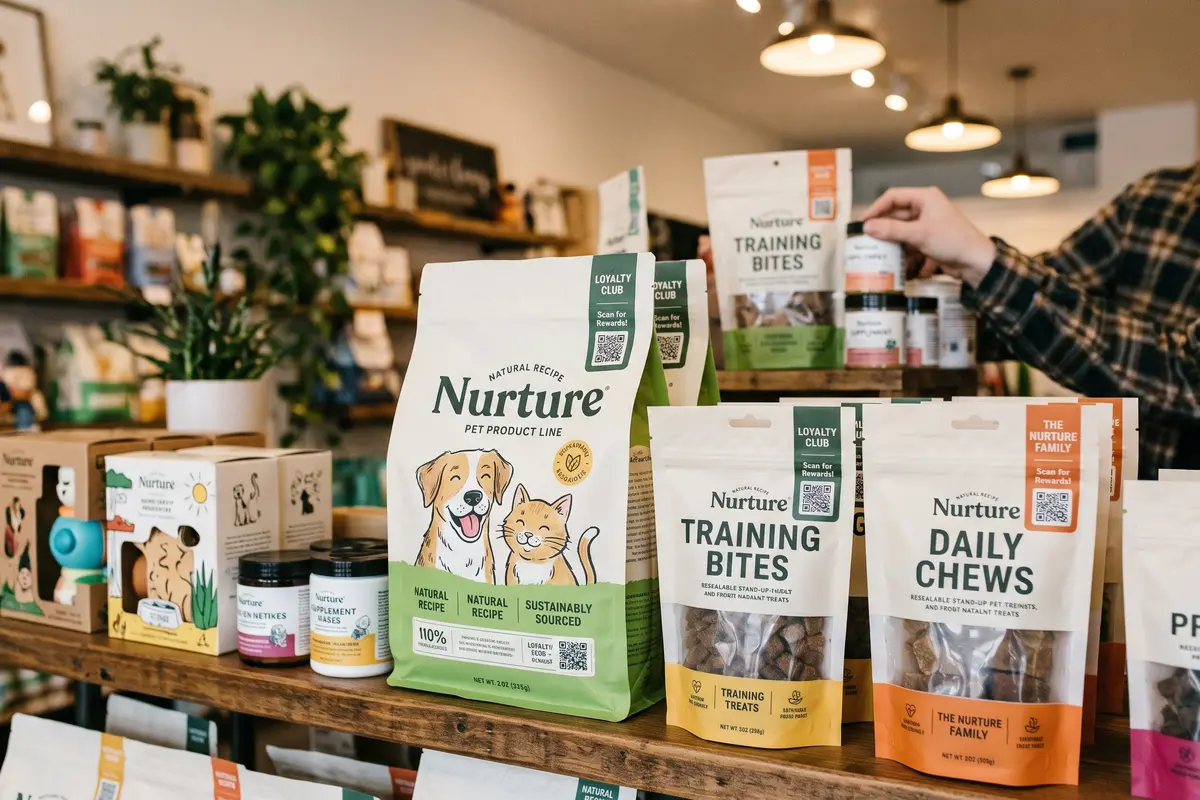
Pet owners often make their first judgment about a product before they read an ingredient list or compare prices. Color, label clarity, package shape, and material quality all influence what shoppers pick up and remember. In a crowded pet care market, those details can turn a first purchase into a lasting habit.
Packaging also carries practical responsibilities. It must protect the product, communicate required information, and help buyers quickly find the right option for their pets. Brands that treat the package as part of the customer experience stand out by fitting in and have a stronger foundation for earning trust.
Packaging sets expectations at first glance
A package gives shoppers an immediate preview of the brand behind it. Crisp printing and consistent colors suggest careful quality control, while crowded text or a difficult closure can create doubt.
Start with a clear visual hierarchy. The brand name, product type, and main differentiator should be easy to identify from several feet away. A dog treat package, for example, might lead with the flavor and intended dog size, then place feeding guidance and ingredient details in a secondary position.
Labels must also follow applicable pet food labeling requirements. Building compliance into the design process early helps prevent expensive revisions after artwork has already been approved.
Choose packaging around the customer experience
Before approving a new format, think through how the customer will carry, open, store and dispose of it. A resealable pouch may suit treats used over several weeks, while a durable label must stay readable on grooming products stored near water.
Brands comparing materials, label formats and print capabilities can explore Pet Care Packaging options designed for pet food, treats and care products. The final choice should support shelf appeal while meeting real performance demands.
Prototype testing can expose small frustrations before launch. Ask several pet owners to open and close the package, read the instructions, and store it as they normally would. Watch where they hesitate instead of relying only on survey answers.
Build recognition across every sales channel
Customers should recognize a brand just as easily on a phone screen as they do in a store aisle. Keep core colors, typography, and graphic elements consistent across package sizes, ecommerce images, and promotional displays. This visual continuity helps shoppers find a familiar product without studying every label.
Shelf placement matters too. A strong package can lose visibility if key text sits below the shelf edge or neighboring products overwhelm its color palette. Digital planning tools can help teams test layouts before a rollout. This guide to how planogram software drives sales in competitive retail markets explains how planned product placement can improve visibility and support a more consistent retail presentation.
Make useful information easy to find
Pet owners want practical answers quickly. Who is the product for? How much should they use? Does it require special storage? Strong packaging answers these questions in plain language without forcing the shopper to search through dense blocks of copy.
Use short headings and readable type to separate ingredients, directions, and reliable internet information. Icons can help identify life stage, product size or storage needs, but each symbol should have an obvious meaning. A decorative badge that looks like a certification can confuse customers and weaken credibility.
Online listings should show the same essential details. Include clear images of the front, back, and side panels so buyers can review the package before ordering.
Treat sustainability claims with care
Many shoppers consider environmental impact, yet broad claims can create skepticism. Specific language gives customers something meaningful to evaluate. If a pouch uses less material than the previous format, state the measurable reduction. If part of a package is recyclable, identify the component and explain any preparation required.
The Federal Trade Commission’s environmental marketing guidance can help marketing teams understand how to support claims and avoid vague wording. Local recycling rules vary, so avoid promising that every customer can recycle a material curbside.
Material changes also require performance testing. A package that tears during shipping or allows food to become stale may create more waste, refunds and customer frustration.
Turn consistency into loyalty
Recognition grows when a package delivers the same dependable experience each time. Maintain approved color standards, inspect print quality and test seals or closures at scheduled intervals. If suppliers or materials change, compare the updated package with the version customers already know.
Listen closely to support requests and product reviews. Repeated comments about hard-to-read directions, broken zippers, or messy pouring point to practical design problems. Fixing those details shows customers that the brand pays attention after the sale.
The strongest pet care packaging feels familiar on the shelf and useful at home. When the next purchase comes around, that combination gives customers a clear reason to reach for the same product again.